


Bappenas Strengthens Collaboration with Monash University for Strategic Human Resource Development
Prime News - Wed, 22 April 2026
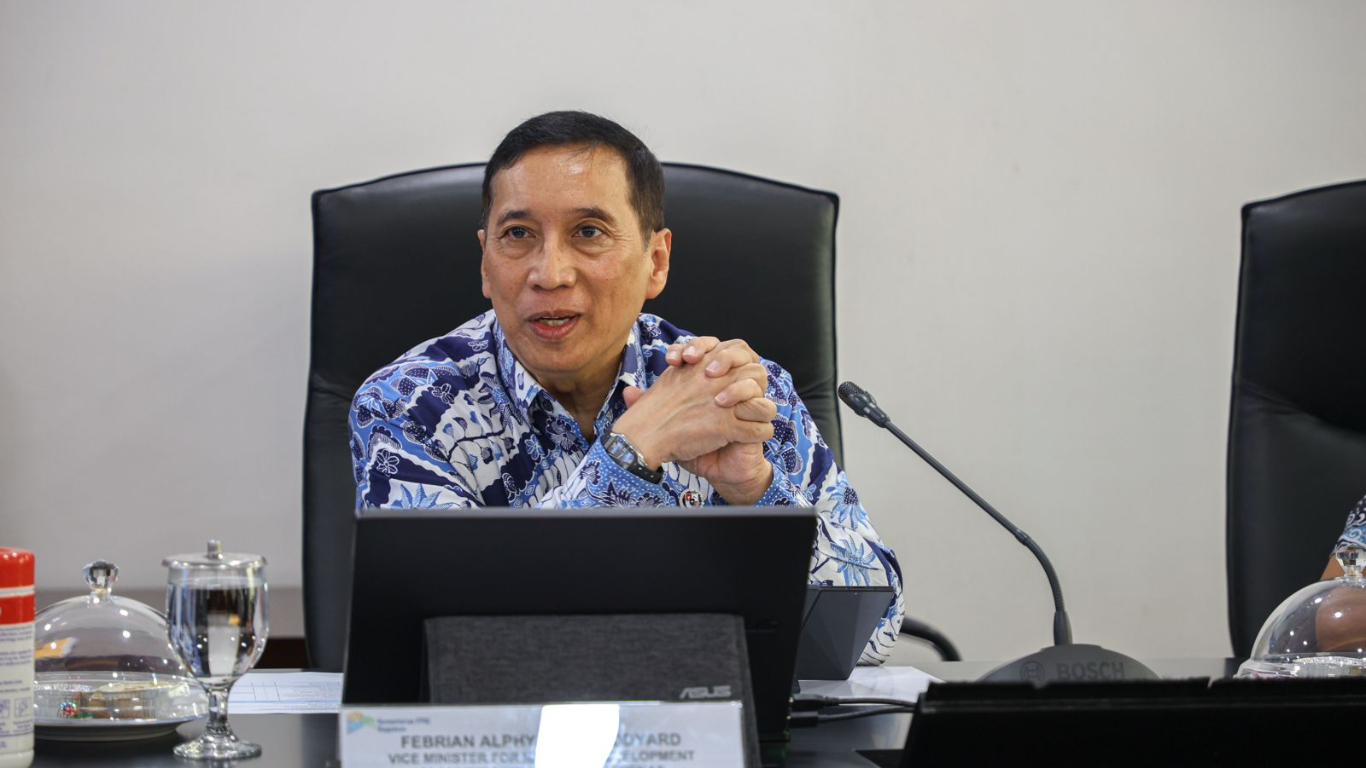
The Vice Minister for National Development Planning/Vice Head of Bappenas, Febrian Alphyanto Ruddyard, emphasised the importance of aligning human resource (HR) development with national strategic needs during a meeting with representatives of Monash University on 22 April 2026.
In his remarks, Vice Minister Febrian underscored the need for needs-based and measurable planning, including projections for the number of personnel with specific qualifications. He explained that Indonesia must have clear calculations to ensure that, within a year, it can produce a certain number of officials with the required competencies. “I will not speak about technical matters, but what is clear is that this is government funding, and therefore it must be used in accordance with government needs. It cannot simply follow individual trends after graduation; rather, it must respond to concrete development needs. This must be systematically designed to genuinely support government functions,” said Vice Minister Febrian.
In the context of priority sectors, Vice Minister Febrian highlighted the importance of strengthening capacity in the energy sector. “Energy is a very important aspect of national planning. We can begin with concrete steps, such as providing Bappenas personnel with direct experience in sectors like PLN so they can better understand Indonesia’s energy ecosystem. This understanding is crucial for formulating appropriate policies,” he explained.
Vice Minister Febrian also identified three key focus areas that could serve as starting points for collaboration: food systems, bioenergy, and waste management.
“Waste management, for example, is a real need in Indonesia and has significant potential for development, both from scientific and business perspectives. This is part of a broader social reform initiative that requires strong policy support,” he stressed.
Responding to the remarks, the President of the Faculty of Business at Monash University, Simon Wilkie, conveyed his institution’s commitment to bridging academia and public policy. “We are at a stage where we are striving to ensure that academics can directly contribute to policymaking, so that decisions are better and have a tangible impact. Our experience shows that close interaction between academics and policymakers is essential to drive meaningful change,” he stated.
Meanwhile, the President and Pro Vice-Chancellor of Monash University Indonesia, Matt Nicholson, added that Monash Indonesia has demonstrated concrete contributions to human resource development in Indonesia. “In our first four years, we have had around 1,000 students across various strategic fields, as well as collaborative programmes with PLN (national electricity provider) that are now entering their third year. We have also developed a tripartite PhD supervision model involving Monash Indonesia, Monash Australia, and domestic universities,” he explained.
According to Nicholson, this model enables students to remain based in Indonesia while gaining international experience and building strong academic and policy networks.
This meeting reflects a shared commitment between the government and international partners to strengthen the development of high-quality human resources aligned with the national development agenda, particularly in strategic sectors that are priorities for Indonesia.
Monash University Indonesia was established in 2021 and is located in BSD City, South Tangerang, as a branch of Monash University, located in Melbourne, Australia