

Bappenas Gathers Cross-Sectoral Inputs to Ensure Inclusive, Fair, and Equitable Development Policies
Development News - Wed, 10 December 2025
The Ministry of National Development Planning/Bappenas, in collaboration with INKLUSI (the Australia–Indonesia Partnership Towards an Inclusive Society) continues to demonstrate its commitment to strengthening synergy among government, organisations of persons with disabilities, development partners, and other stakeholders in promoting national development that is more just, equitable, and inclusive for all citizens, including persons with disabilities.
The Secretary of the Ministry of National Development Planning/Principal Secretary of Bappenas, Teni Widuriyanti, emphasised that persons with disabilities have significant potential to make positive contributions to their communities, society at large, and development.
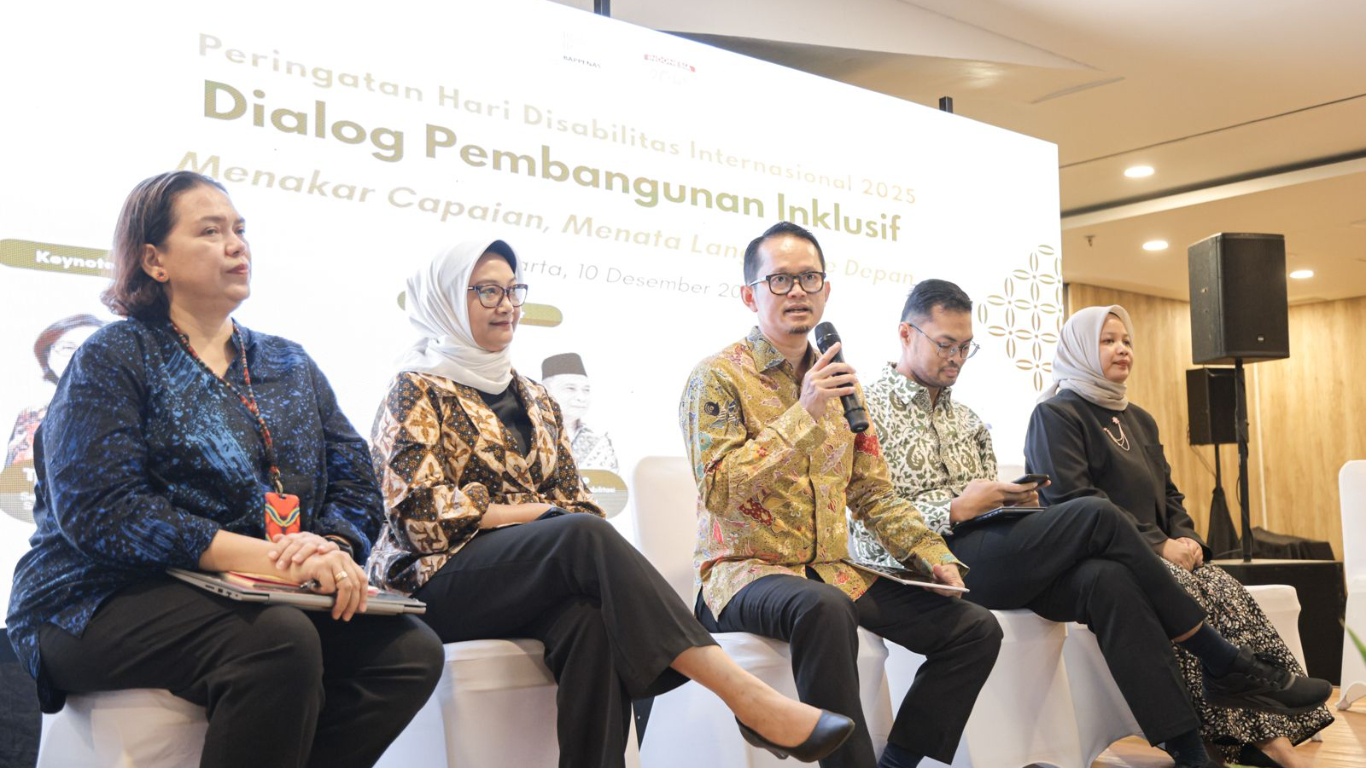
“The Ministry of National Development Planning/Bappenas has a very strong commitment to development that involves all components of the nation in Indonesia in creating inclusive policies. We are all subjects with equal contributions; there is no difference,” stressed Secretary Teni at the Inclusive Development Dialogue: Taking Stock of Achievements, Charting the Way Forward 2025, held to commemorate the 2025 International Day of Persons with Disabilities in Jakarta on Wednesday (10 December).
In both the 2025–2029 National Medium-Term Development Plan (RPJMN) and the 2025 Government Work Plan (RKP), particularly National Priorities 4 and 6, the government directs development policies to strengthen equality and the fulfilment of the rights of persons with disabilities and older persons. This includes a focus on improving access to basic services, enhancing quality of life, and ensuring meaningful participation in cross-sectoral development. The rights, participation, and protection of persons with disabilities are also reinforced by Law Number 8 of 2016 on Persons with Disabilities, which in national development planning is implemented through the Master Plan for Persons with Disabilities (RIPD) and the National Action Plan for Persons with Disabilities (RAN PD).
“The next steps that can be taken include strengthening central–local government regulations, enhancing social welfare, planning and budgeting for the welfare of persons with disabilities, collaboration with the private sector, academia, organisations of persons with disabilities, and other sectors, as well as strengthening data and information systems,” stated Maliki, Deputy for Community Empowerment, Population, and Employment at the Ministry of National Development Planning/Bappenas.
The interactive dialogue, which gathered inputs and perspectives from representatives of organisations of persons with disabilities regarding the conditions and challenges that remain, as well as expectations and the need for government support, constitutes a strategic effort to realise development that is fair, equitable, inclusive, and sustainable. “The Ministry of National Development Planning/Bappenas is currently drafting the National Action Plan for Persons with Disabilities (RANPD) to ensure the fulfilment of rights, equality, and active participation of persons with disabilities in development. These efforts must be inclusive and supported by a strong, curated data foundation. If the data foundation is weak, interventions will also be ineffective,” concluded Secretary Teni.